Newport Beach
A Maritime Journey
Through Aquatic History
Centuries of seafaring tradition — from indigenous navigators to the docks that launched Little Lido Boat Co.

"Newport Beach's history is entwined with the ebb and flow of its coastal waters — every voyage a continuation of centuries-old maritime traditions."
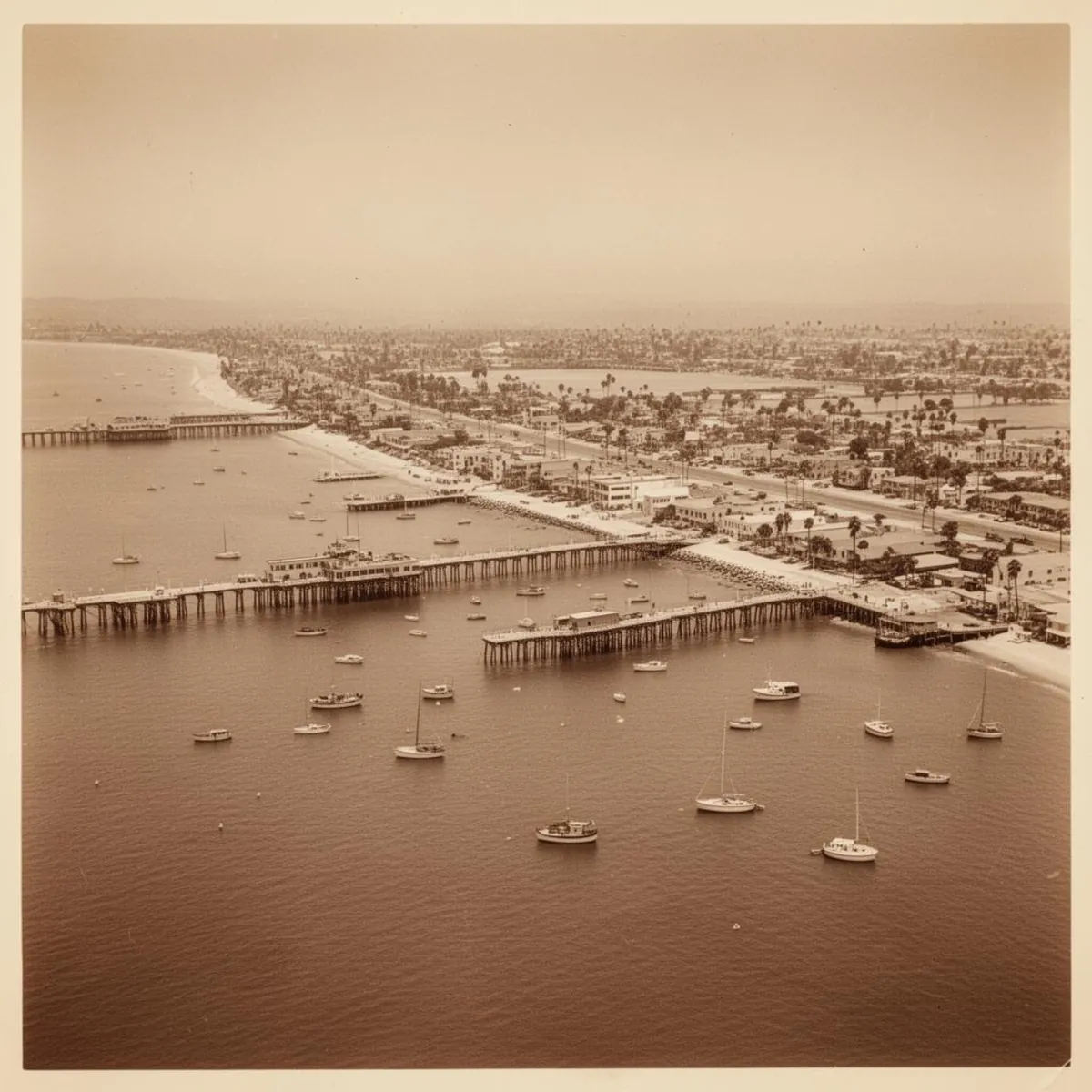
A Journey Through Time
Eight chapters that shaped the harbor we sail today.
Exploration & Coastal Legacy
Long before Newport Beach adorned the maps, Native American communities — including the Tongva and Juaneño/Luiseño people — navigated the coastal waters for thousands of years. The allure of Newport's pristine shores captivated Spanish explorer Juan Rodriguez Cabrillo in 1542, marking the beginning of maritime exploration in the region.
Spanish & Mexican Seafaring Roots
Under Spanish and Mexican rule, Newport's shores witnessed the establishment of ranchos and the rise of seafaring enterprises. The once-tranquil Newport became a bustling hub for maritime activities, laying the groundwork for future nautical endeavors.
McFadden's Wharf: The Maritime Epicenter
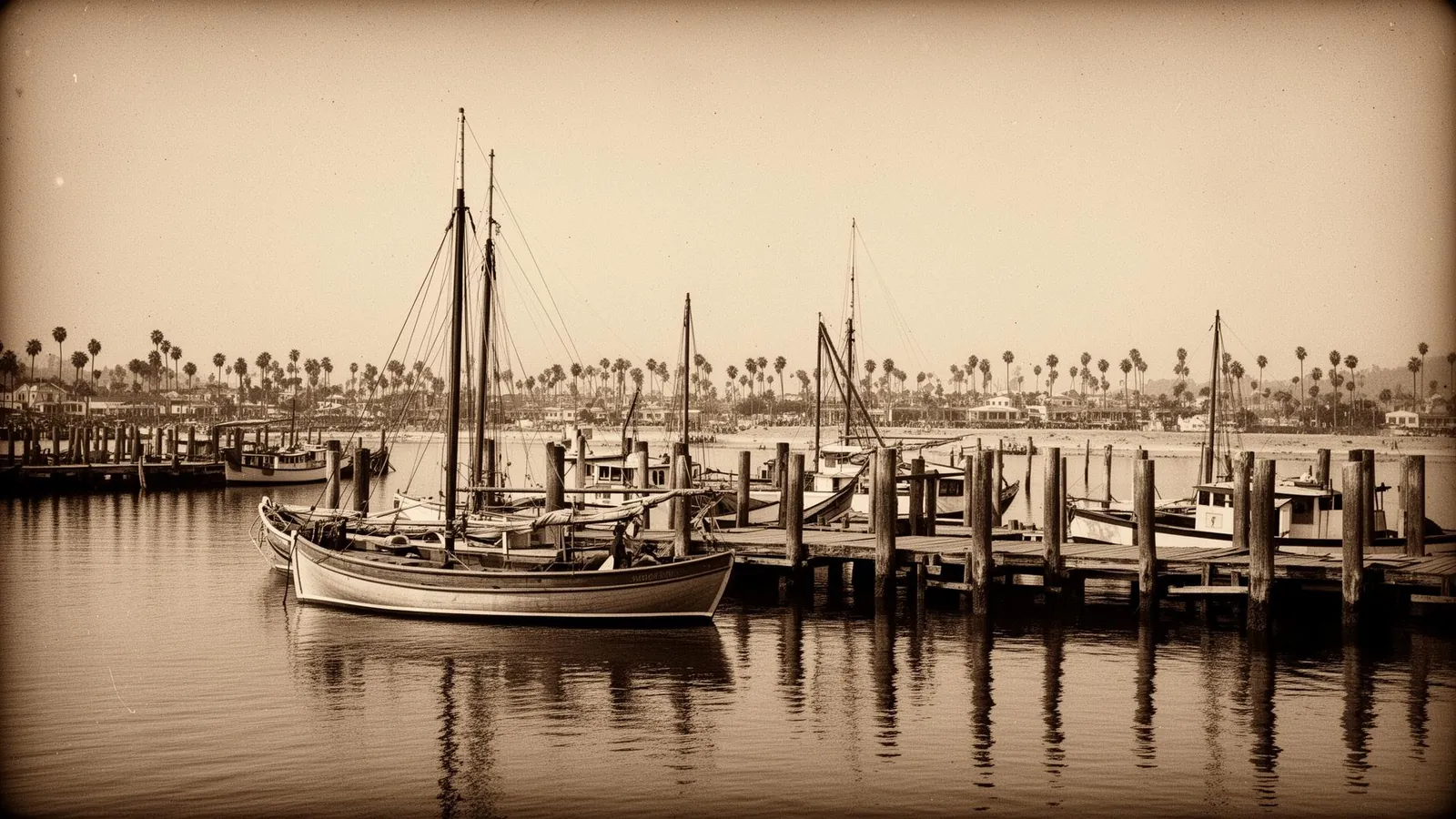
Post-Civil War, Newport's destiny intertwined with McFadden's Wharf, where shipping and commerce flourished. Located near the present-day Newport Pier, it became the largest business in Orange County. The wharf, a testament to Newport's maritime prowess, thrived until the advent of the San Pedro Harbor in 1899.
Transition to Leisure Boating
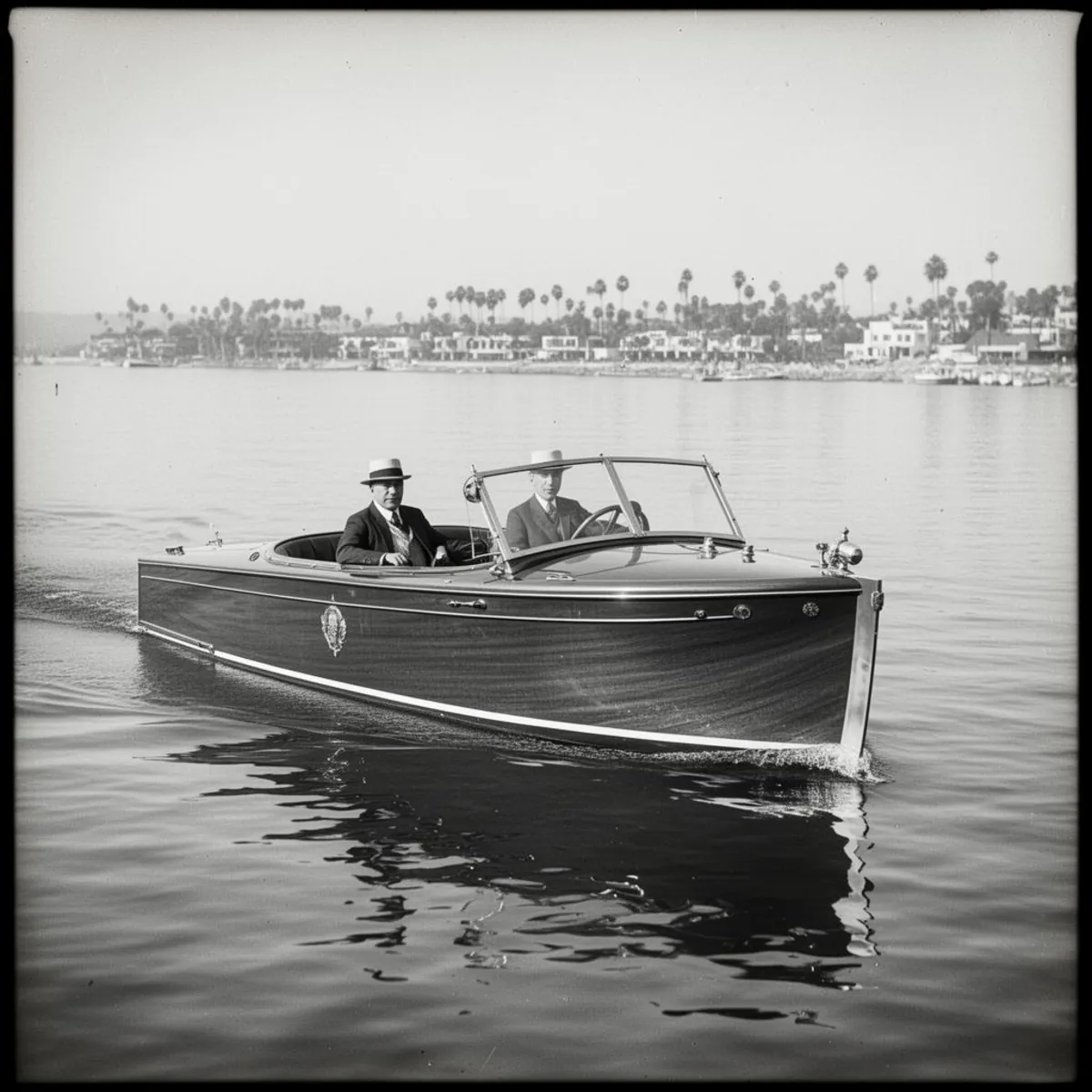
As the commercial shipping industry waned, Newport Beach gracefully transitioned into a haven for leisure boating and recreation. With the incorporation of the city in 1906, Newport's identity expanded to embrace a new era of aquatic adventure.
The Birth of Balboa Island
Entrepreneurs like William S. Collins and Henry E. Huntington recognized the potential of Newport Bay for resort and recreation. Channels were dredged, and Balboa Island emerged in 1909, adding a charming island dimension to Newport's maritime legacy.
Balboa Pavilion & the Rise of Tourism
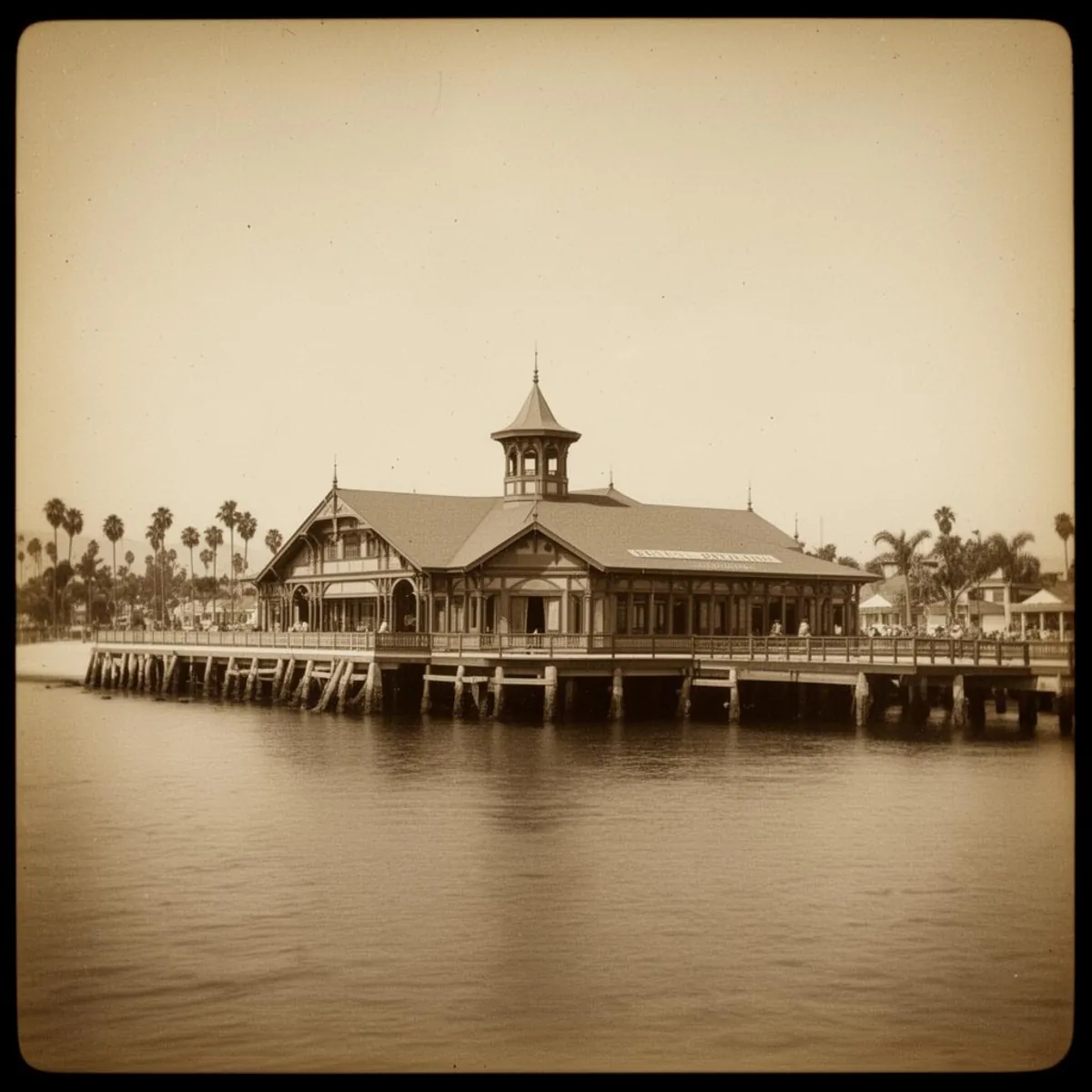
In 1906, the Balboa Pavilion — an architectural jewel — and its companion, the Balboa Pier, became beacons for tourists arriving via the Pacific Electric Railway. Newport Beach transformed into a sought-after tourist destination, captivating visitors with its maritime charm.
Legacy of Maritime Commerce
The 20th century witnessed the evolution of Newport's maritime landscape. From the first Christmas Boat Parade in 1908 to Newport Harbor's official dedication in 1936 — and the sale of Collins Island to Hollywood icon James Cagney in 1938 — each chapter added to Newport's maritime tapestry.
Modern Maritime Marvels
In recent decades, Newport Beach has retained its maritime allure. The Balboa Island Ferry, operational since 1922, continues to ferry visitors between the island and the Balboa Peninsula. Today, as you embark on a journey with Little Lido Boat Company, you step onto the same waters that have woven the maritime legacy of Newport Beach for centuries.
Sailing Through History
Little Lido Boat Company invites you to be part of this rich aquatic legacy — creating your own tales on the azure canvas of Newport's maritime history. Welcome aboard.